How Marriage Counseling Improves Communication
Published • By Jorge Yunes, LPC • San Antonio, TX
Communication is one of the most common reasons couples seek marriage counseling. Many partners care deeply about one another, yet still find themselves caught in painful conversations that lead to frustration, defensiveness, silence, or emotional distance.
Understanding how marriage counseling improves communication can give couples a clear roadmap out of these exhausting loops. In his San Antonio couples counseling practice and through online therapy across Texas, Jorge Yunes, LPC, helps partners slow down recurring conflict, identify emotional triggers, and practice healthier ways of speaking and listening.
Communication Problems Are Often About More Than the Topic
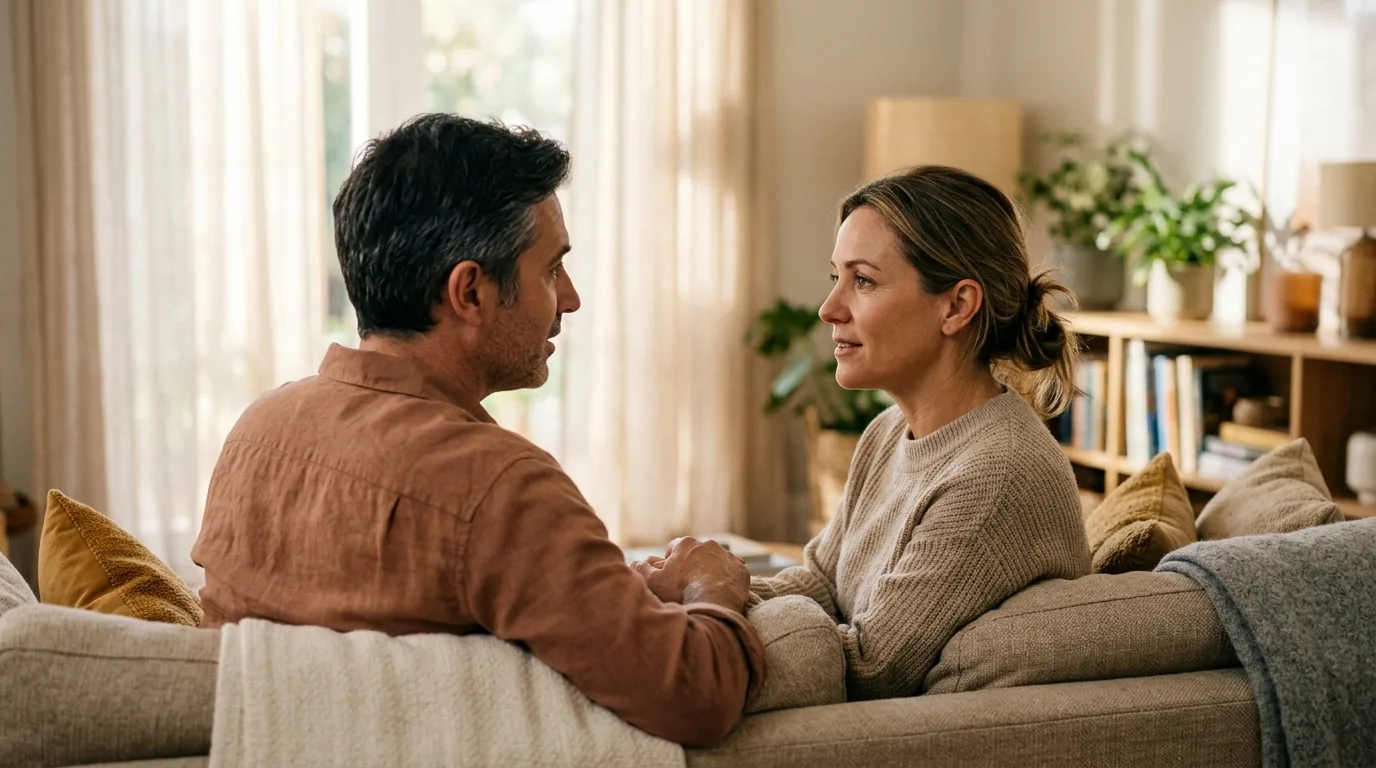
Couples may argue about chores, money, parenting, time together, family boundaries, or intimacy. While those topics matter, the deeper issue is often how each person experiences the conversation.
For example, one partner may bring up household responsibilities because they feel unsupported. The other may hear the concern as criticism and become defensive. The first partner may then feel even less heard and raise their voice or repeat the concern more strongly. The second partner may shut down further.
Over time, this cycle can become familiar:
- One person pursues the conversation while the other withdraws.
- One person criticizes while the other becomes defensive.
- Both people avoid difficult topics until resentment builds.
- Small concerns become larger arguments because they were not addressed early.
- Partners focus on proving their point instead of understanding each other.
Marriage counseling can help couples identify these cycles and see that the cycle itself, not just one person, is often part of the problem.
Marriage Counseling Creates Space for Both Partners to Be Heard
At home, difficult conversations often happen when both partners are tired, rushed, distracted, or already upset. It can be difficult to slow down long enough to truly listen.
Marriage counseling provides a structured setting where both people have an opportunity to share their experience. The purpose is not to decide who is right or wrong. It is to better understand each person’s perspective and the pattern that develops between them.
A counselor may help by:
- Slowing down a conversation when emotions begin to rise
- Clarifying what each partner is trying to communicate
- Helping partners identify feelings and needs beneath anger or frustration
- Redirecting conversations away from blame and toward understanding
- Pointing out patterns that may be difficult to see in the moment
- Encouraging both people to speak honestly and listen more carefully
For many couples, simply having a calmer place to talk can be an important first step.
Learning to Express Concerns More Clearly
When people feel hurt, dismissed, or overwhelmed, it is easy to communicate through criticism, sarcasm, accusations, or withdrawal. These reactions are understandable, but they often make the other person less able to listen.
Shifting From Blame to Clear Requests
Marriage counseling can help couples practice expressing concerns in a clearer and more direct way.
Instead of saying:
You never care about anything I say.
A partner might learn to say:
When I try to talk about something important and the conversation ends quickly, I feel dismissed. I would like us to find a time when we can both stay present.
Instead of saying:
You are always on my case.
A partner might learn to say:
I feel overwhelmed when I hear several concerns at once. It would help me if we could focus on one issue at a time.
This does not mean couples must speak perfectly. It means they can learn ways to communicate that make it easier for the other person to hear the message.
Listening Without Immediately Defending
Listening is more than waiting for your turn to respond. In a relationship, it often means trying to understand the feeling or need behind what your partner is saying.
De-escalating the Defensive Reflex
This can be difficult when you feel blamed. You may want to explain your side, defend your intentions, or point out what your partner has done wrong. Those responses are natural, but they can cause the conversation to become a debate rather than a connection. When individual stress, chronic worry, or persistent low mood make staying calm difficult, understanding how anxiety and depression counseling can quiet emotional reactivity is often an important piece of the puzzle.
In marriage counseling, couples may practice skills such as:
- Pausing before responding
- Reflecting back what they heard
- Asking questions to better understand the other person’s experience
- Acknowledging feelings without necessarily agreeing with every detail
- Separating intent from impact
- Staying focused on one concern at a time
For example, a partner might say:
I hear that you felt alone when I stayed late at work and did not let you know. That was not my intention, but I understand why it hurt.
This kind of response does not solve every issue immediately. It can, however, reduce defensiveness and help both partners feel more understood.
Learning How to Handle Conflict Differently
Healthy communication does not mean never arguing. Every couple disagrees at times. The difference is often in how conflict is handled.
Marriage counseling can help couples recognize early signs that a conversation is becoming unproductive. These signs may include raising voices, interrupting, shutting down, bringing up old grievances, or making broad statements such as “you always” or “you never.”
Couples may learn how to pause before the conversation becomes overwhelming and return to it when both people are calmer. They may also learn how to focus on the issue at hand instead of turning one disagreement into a larger argument about the entire relationship.
Some helpful conflict skills include:
- Starting difficult conversations more gently
- Taking a break when emotions are too high
- Returning to the conversation at an agreed-upon time
- Making specific requests instead of broad complaints
- Taking responsibility for your own part in a conflict
- Offering repair after a hurtful interaction
A repair can be simple. It may sound like:
I do not like how I said that. Let me try again.
or:
I can see that this conversation is getting too heated. I want to come back to it when we are both calmer.
These small changes can make an important difference over time.
Rebuilding Emotional Connection Through Better Communication

Communication is not only about resolving problems. It is also how couples build closeness, show appreciation, and stay connected during stressful seasons.
When communication has become strained, partners may stop sharing their daily experiences, hopes, worries, or needs. They may focus only on logistics, parenting, work, or household responsibilities. Over time, this can create a sense of living alongside one another rather than feeling like a team.
Marriage counseling can help couples make room for more meaningful conversations. This may include talking about what each person needs to feel supported, finding ways to express appreciation, or creating regular opportunities to check in with one another.
Connection often grows through small, consistent moments of attention and care. Better communication can help make those moments more possible.
Change Takes Practice Outside of Sessions
Marriage counseling can provide guidance and structure, but many communication changes happen between sessions. Couples may be encouraged to practice a new skill, notice a recurring pattern, or create time for a brief check-in at home.
Progress is rarely perfect or immediate. Old patterns can return, especially during stress. What matters is that both partners become more aware of the pattern and have more tools for responding differently.
Over time, couples may begin to notice that they can discuss difficult topics with less escalation, recover more quickly after conflict, and feel more confident that they can work through challenges together.
When Communication Does Not Feel Safe
Marriage counseling may not be appropriate when there is active abuse, coercive control, intimidation, or fear for someone’s safety. In those circumstances, safety should come first. Individual support and local domestic violence resources may be more appropriate than joint counseling.
Related Reading
Taking the Next Step
Communication can change, even when a couple has felt stuck for a long time. Marriage counseling offers a place to better understand the patterns affecting your relationship and begin practicing healthier ways to talk, listen, and respond to one another.
Learn more about how marriage counseling in San Antonio with Jorge Yunes, LPC, can help you break negative conversational cycles, or request a free 15-minute consultation to get started.

Jorge Yunes, LPC • Licensed Professional Counselor
Jorge Yunes, LPC, has over 15 years of clinical experience helping couples and individuals navigate relationship challenges, anxiety, trauma, and life transitions in San Antonio and online across Texas.